By Diane Parkes
When Greek choreographer Andonis Foniadakis was commissioned to create a new work for Cuban company Acosta Danza, he was intrigued by the request to base it on the music of an 18th century Cuban composer.
The idea had originated with Acosta Danza founder and artistic director Carlos Acosta, who asked Andonis to choreograph to the music of priest-turned-composer Esteban Sallas and his choral work Salve Regina.

Andonis, who has choreographed for companies across the globe, agreed – but with a condition.
“Carlos brought up the idea of working on baroque music, inspired by Cuban Baroque and the composer Sallas, and I thought it would be a fun project to work on. I said yes as long as we are working not on the original music of Sallas but interpreting the score by my own composer Julien Tarride.
“I have worked with Julien since we met in 2003 and we have done several works of baroque music together, including Bach, so Carlos’ idea was falling into something we were familiar with.”
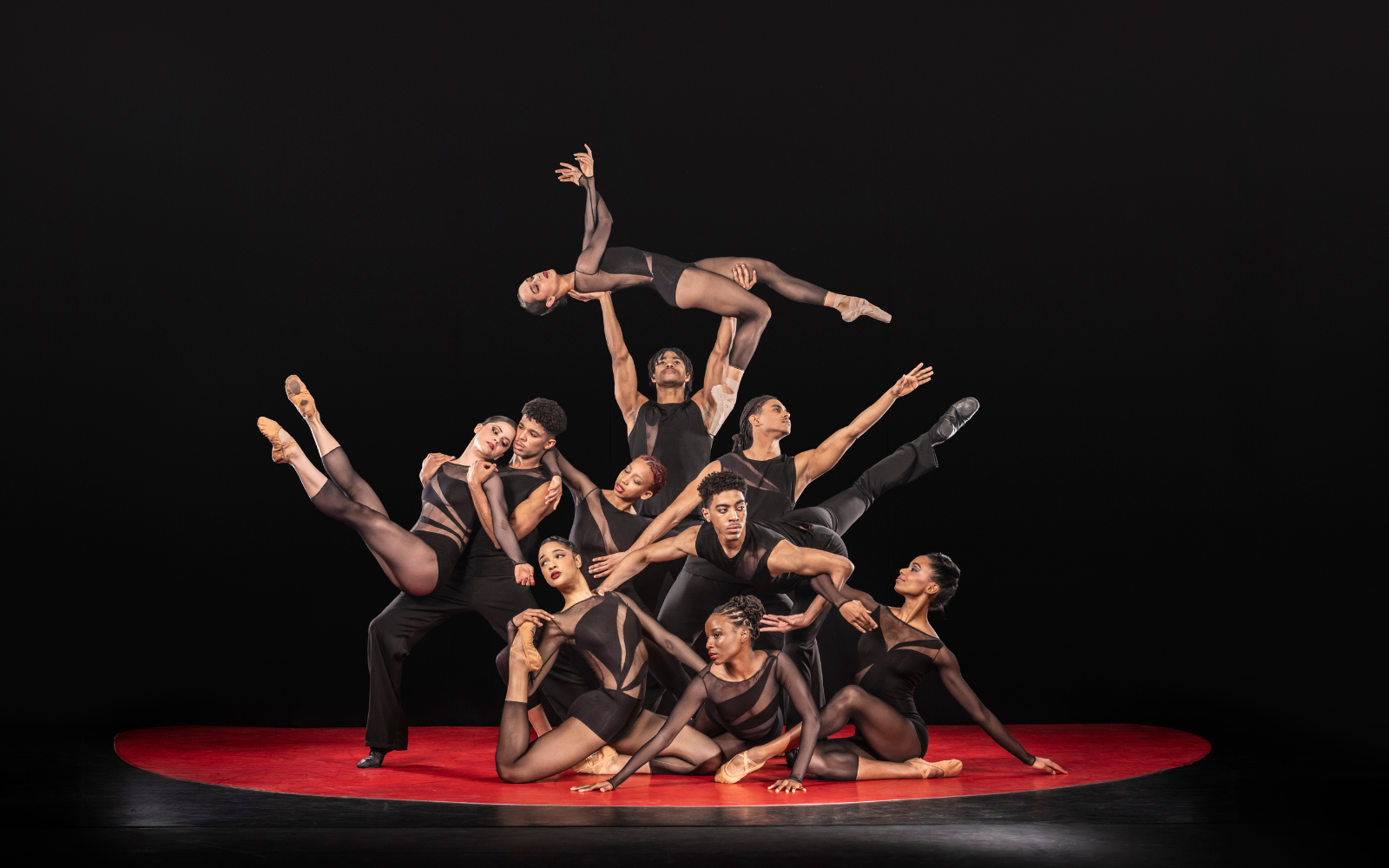
The result is not only a new interpretation of Sallas’ work incorporating choral, guitar and violin, but also Andonis’ new dance piece Pearls, which will have its world premiere in the UK this autumn. Alongside Spanish choreographer Goyo Montero’s Chacona set to music by J S Bach, Pearls forms part of the Acosta Danza Cuban Baroque double bill which plays Norwich Theatre Royal 20 – 21 October 2026.
Andonis’ choreography is inspired by the baroque musical form of a chaconne in which a musical structure is repeated in a progression with continuous variations.
“Chaconne is a movement that has been used by many composers,” explains Andonis. “There is a playfulness throughout the theme of chaconne around Julien’s reinterpreted baroque sound. So Julien’s composition is both looking backwards towards tradition but then with a modern take on it.
“What is interesting is how the idea of chaconne inspired and matched my energy of dance and how I like to build my choreography. The idea of looping is very important in baroque. What keeps it going is twisting and turning; you can tone down and you can build up. I like that idea of building in loops and spirals. It is like a natural flow of body movement.
“So I started a pattern or motif in choreography, slowly expanding it and having variants of it. There is a sense of logic and an organic happening throughout the choreography which I formed into an energy flow that navigates through the eyes and the ears of the audience in a very natural way. It’s like they are following it naturally but then they get trapped in it so they cannot really escape.”


In choosing to title the work Pearls, Andonis again turned to the baroque era which is believed to take its name from the Portuguese word ‘barroco’ which means ‘misshapen pearl’.
“Pearls are an emblematic form of the baroque era,” Andonis explains. “They have this excellence in shape and complexity. The Acosta Danza dancers are also very special and unique. I thought if I name the piece Pearls then it refers to the pearls of baroque and all of the dancers because they are so precious and so unique – as each pearl is.”
Andonis trained at the Greek National School of Dance in Athens and the Rudra Bejart School in Lausanne before dancing with companies including Bejart Ballet Lausanne and Lyon Opera Ballet. He was artistic director of Greek National Ballet in Athens in 2016/17.
As a freelance choreographer he has worked with companies across the world including Martha Graham Dance Company, Sydney Dance Company, Zurich Ballet, Rambert, Lyon Opera Ballet, and Geneva Ballet. He was movement coordinator for Darren Aronofsky’s film Noah in 2014 and his awards include the 2012 Danza e Danza Award for Best Choreographer and the Critics Union of Music and Theatre Award for Best Production in Greece for Galaxy. He was also named #1 Choreographer of the Year in the German Tanznetz critics’ survey for the 2024/25 season.
With his talents very much in demand, Andonis enjoys working with different companies.
“What is always interesting in these collaborative works is to find the meeting point because I have my style and a way of doing things. I need to sense and I need to feel not only the physicality but also the characters and the vibrations of each single body of that company.


“With Acosta Danza, it’s a very interesting mix of how I would first approach the dancers in order to come into my dynamics and my aesthetics. But then also how easily I would move out of that and try to embrace the fact that they have a very specific type of energy and a kind of groove that is unique to their cultural background.
“I tried to embrace the fact that there is a flair and a flavour that adds into my style according to what they can deliver as well. It’s very interesting to be able to welcome that, process it and incorporate it in my whole aesthetic of work.”
Acosta Danza was created by former Royal Ballet principal Carlos Acosta in 2015 in his home city of Havana. Aiming to encourage and support young dancers in Cuba and commission and showcase new work, the company has performed across Europe, the Americas, Asia and the Middle East. This October’s UK tour features dates at York Theatre Royal, Sadler’s Wells in London and Norwich Theatre Royal.
Andonis, says audiences can look forward to something special.
“Audiences will see very vivid and very playful choreography which in a very curious way I would say has an erotic and sensual vibe to it. It will demonstrate the culture of the company in such a virtuosic way, being truthful to what human beings are emoting and connecting to while they are performing something challenging.
“Choosing baroque music reminds us that some classic works are classic for a reason. They are so much into the core of humanity and its vibration and dynamics, which will always stay relevant. There is a very beautiful combination of having the contemporary vibe of now put into that baroque style of music and finding a meeting point. I think it will invite intrigue and surprise from audiences.”