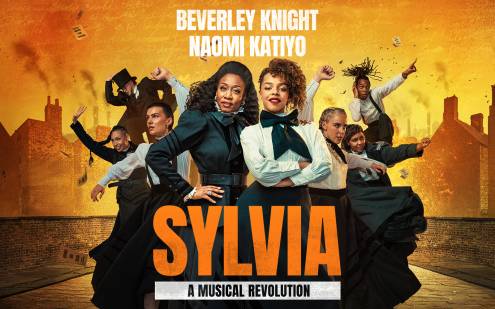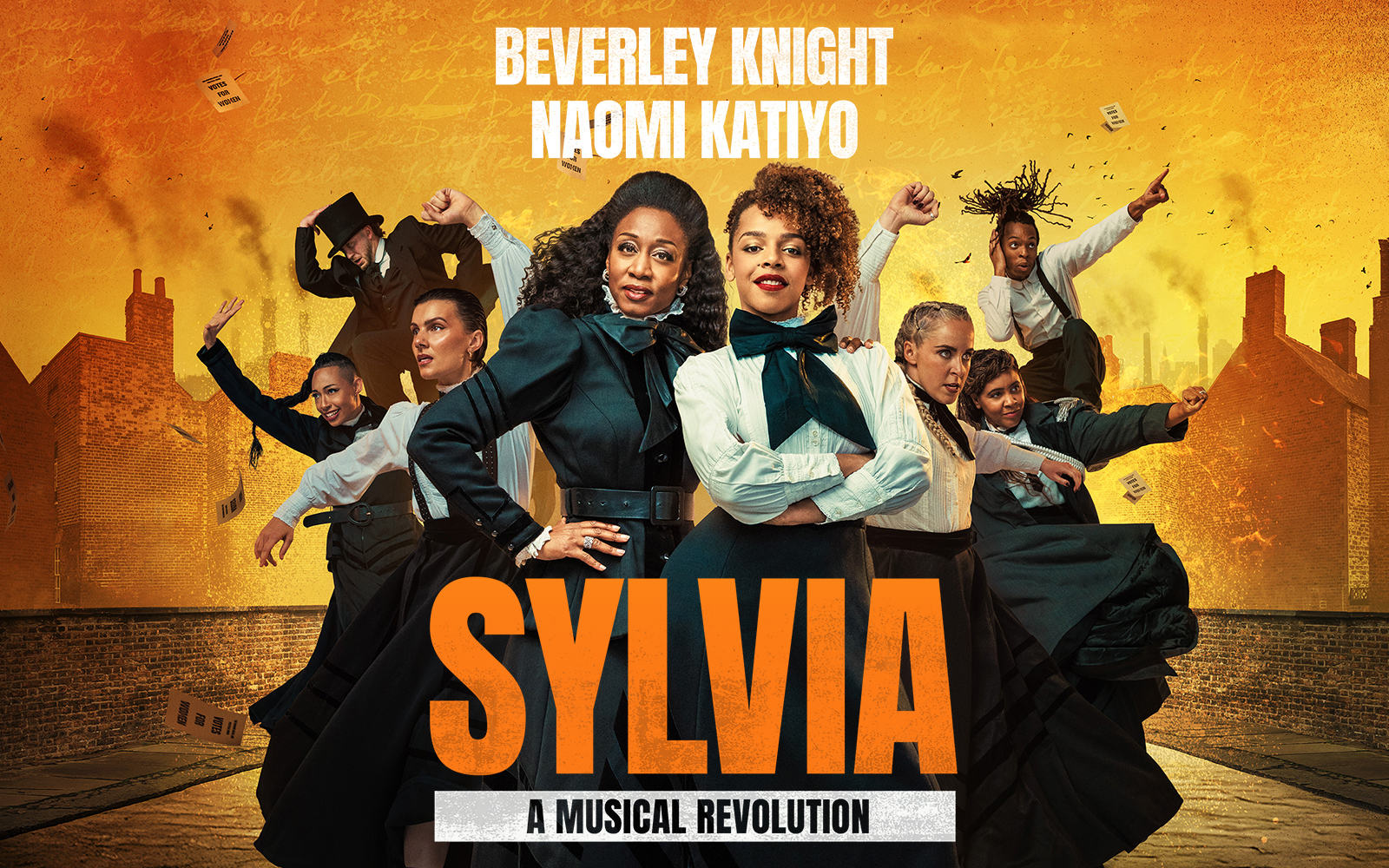
Beverley Knight has enjoyed a rich and varied career spanning music, theatre and television. So for a role to rank “right up there at the top” of her career, it has to be something special. Her portrayal of Emmeline Pankhurst in Sylvia is exactly that. Having joined the show’s original workshop production at the Old Vic in 2018, Knight has been part of its journey from the very beginning, even bagging an Olivier Award for Best Supporting Actress in a Musical in 2023. Here, she talks about the hip-hop musical that shines a light on the untold story of Emmeline Pankhurst’s middle daughter, Sylvia and her relationship with the show.

Beverley, you’ve been with the show since its early days. What keeps pulling you back?
Emmeline is a complicated, brilliant character to play. She is undoubtedly a British hero. But she’s also an important figure globally. Unlike the suffragists, the suffragettes were masters of controlling their own narrative. They understood the power of publicity, popularised the hunger strike as a form of protest and shocked the world with their militancy.
What fascinates me is her strength as a woman. She was taking on the establishment, holding the government to account and genuinely frightening those in power. That was almost unimaginable for someone raised with Victorian values. But she was also an autocrat; it was her way or the highway. As the show explores, that ultimately tore her family apart. She was inspirational and deeply flawed all at once.
What also keeps drawing me back is how relevant she remains. We’re still asking the same questions today: Who has the right to protest? What makes a protest acceptable? When does civil disobedience become militancy, and when does militancy become terrorism? Should change come through peaceful protest, as Sylvia believed, or through more confrontational action? More than a century later, many of the conversations surrounding women’s rights haven’t gone away. We only have to look at what’s happening in the United States to see that rights can still be rolled back. The debates surrounding women’s suffrage are, in many ways, the same ones we’re still having today.
What can audiences who haven’t seen the show before expect?
Sylvia moves at an incredible pace – seriously. We begin in 1903 with the Pankhurst family united, as Emmeline establishes the Women’s Social and Political Union and takes to the streets to rally support for women’s right to vote from a public that is often hostile or indifferent. Over the course of the show, we see the Labour Party initially support the cause before falling away, while the governing Liberal Party emerges as the story’s main antagonist. We watch these women effectively go to war with the government in their fight for equality. And underpinning it all is a powerhouse score inspired by hip-hop, R&B and garage.
What are your favourite songs in the show?
That’s such a tough question because they’re all genuinely fantastic! One of the funkiest numbers is “Suffrajitsu”, which kicks off Act II. Another standout moment is “Stand Up”, a soaring groove ballad in which Sylvia rallies everyone to fight for what they believe in. Then there’s “You’ve Changed”, where Emmeline tries to manipulate and gaslight Sylvia into coming back into the fold. After that song, the two never speak again, so it’s a real turning point in the show.

You’re going on tour which is really exciting! What do each of the stops mean to you?
I’m so excited! We start at Leicester Curve, which is such an important theatre. So many productions we know and love have started there, and what artistic director Nikolai Foster and the team have built is incredible.
Then we’re off to Birmingham, which is the closest I get to playing my hometown, as I grew up nearby in Wolverhampton. I’ve been there countless times and absolutely love it.
Next is Edinburgh, which feels especially fitting because the story of the suffragettes isn’t just an English story – it belongs to the whole of the United Kingdom. Edinburgh is, of course, the home of the Fringe, so audiences there really embrace new work.
Salford is probably the most significant stop on the tour because it’s so closely connected to the Pankhurst family and the birthplace of the suffragette movement. I think it’ll be incredibly emotional performing the show there. Emmeline and Sylvia are such an integral part of Manchester’s history.
Norwich is a lovely one for me personally because it’s where all my in-laws are from. And then there’s Canterbury, which is such an important historic city and somewhere I’ve never actually visited before.
We finish at the Royal Albert Hall, which feels incredibly special. Not only is it where I won my Olivier Award in 2023, but it’s also hugely significant to our story. Emmeline delivered several impassioned speeches there, so bringing Sylvia to that stage in totality (we performed there during the Oliviers in 2023) will feel like a real full-circle moment.

Why is Sylvia a story for 2026?
This show is telling a story from such an important part of history, and so for me, it will always be relevant. But right now, in particular, it is essential because we are not learning from what’s happened before and are repeating the same mistakes.
What does it mean, as a Black woman, to play Emmeline?
It’s a complicated thing because, historically, Emmeline held views that many of us would find difficult today. She welcomed women such as Sophia Duleep Singh into the movement and recognised the value of having Indian royalty associated with the cause. But I’m not convinced she would have been over the moon to see a Black woman playing her.
What I can say is that as a Black woman, I acutely understand what it means to fight for your rights. To fight to be heard. To fight to be treated as an equal. I also know how volatile people can be. They’ll celebrate you when you’re seen as compliant, but the moment you start advocating for yourself, it’s remarkable how quickly they can turn on you.
What do you hope audiences feel when they leave the theatre?
Well, I hope the first thing people do is get out their phones and start looking up these women. I want Sylvia to be a conversation starter and encourage audiences to explore the history for themselves. I also hope they connect the fight they see on stage with what’s happening in the world today.
Written by Anya Ryan