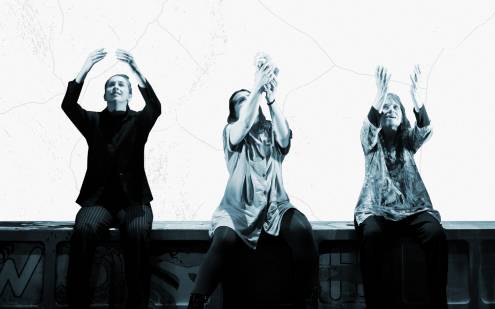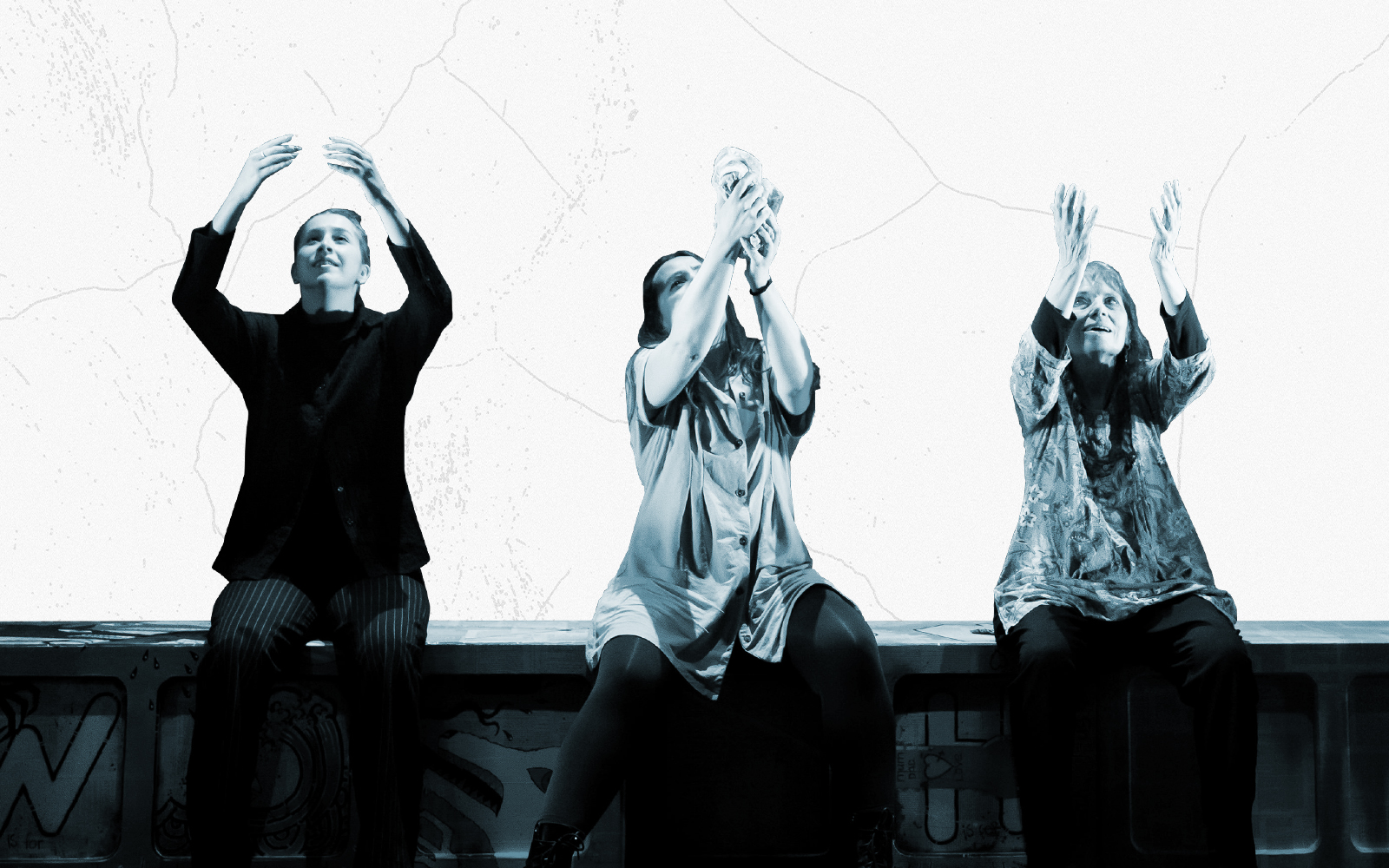
Three years in the making, 3 Migrant Women is a raw and intimate celebration of identity, weaving together the lived experiences of three displaced women through movement, song, and multilingual dialogue. Directed by Miche Montague and part of Norwich Theatre’s Theatre of Sanctuary, the piece is an honest reflection on the contemporary challenges migrant women face today.
Read on for our Q&A with Miche to discover how these unheard voices finally found their rhythm on stage.
Can you tell us a little about the show?
It is an extraordinary, newly created piece that celebrates the identities of four displaced people. An honest, raw reflection of the contemporary challenges faced by today’s migrant women. Intimate moments of unique journeys thread together through movement, conversations and unexpected connections, sharing the universal language of womanhood.
What should the audience expect?
It is an extremely emotive piece of theatre which leads you on an emotional journey. Multilingual, the piece opens in Turkish. You will find yourselves immersed in intimate moments of lived experience.

What do you hope they will feel when they come and see the piece?
Understanding and compassion.
Describe the show in 3 words?
Enlightening, beautiful, honest.
What environment did you try to create when you first brought the group together to harness creativity?
A space filled with trust and inclusivity. A cultural platform for people to express themselves without judgement. An invitation for communities to come together and champion creative voices from all backgrounds.

How did you approach the different experiences of each participant in the group respectfully, but still ensuring their voices were heard?
Connections were quickly made. Journeys were vastly different, but they had shared the experience of leaving their homes. Conversations began, confidence built, and relationships seemed to strengthen very quickly. Our aim was to nurture the skills, talents and unheard voices of our group to ensure our work excluded no one.
What was your initial creative direction for the project?
For diverse theatrical languages to be shared and celebrated, and to give participants of our Theatre of Sanctuary a voice.
How did you guide the group to start shaping the performance?
We had banked a series of moments, developed during workshops, that the group felt voiced their life journeys and that we felt were inspiring. Collectively, we then found a way to weave them into this inspiring piece of theatre.
We were supported by Gecko Theatre. Helen Baggett, associate director, would lead workshops and encourage the belief that we had something special in the rehearsal room. As rehearsals progressed, Ben Samuels of Limbik Theatre worked with us on a soundscape, and Samia Malik offered us the gift of song. Latterly we have also had the encouragement of Good Chance Theatre.

What was your initial approach for guiding the group to devise a piece together?
Once trust had been established, it felt incredibly important that we could find a way to give this group a voice on our stages and beyond.
How did you guide the group to share their experience to be used in a creative way?
We never ask direct questions. We listen and offer space for participants to share their experiences. As language can be a barrier, we begin all our work through movement.
How did you find using personal experiences for a final production? Was it difficult blending specific personal experiences to share with an audience?
Most of our work has been based on our personal experiences: from ‘Migration Matters – looking at how patterns of movement impact the cultural landscapes of the places left, and the places we settle in’ to ‘Turk Hamlet – a short piece of theatre, looking at displacement’. If the work is authentic and honest, it finds a rhythm of its own.
What did you do to get the group to work creatively together before finding a shape for the show?
The work is the product of nearly three years of workshops. Our first year was slowly introducing different styles of storytelling. In our second year, the group felt ready to share chosen moments and exercises in an open studio workshop. Year three led to the devising of 3 Migrant Women.
What inspirations were there for blending movement, sound and dialogue – how much input did the performers have in how the show was built together?
Movement was always the base of our work. Dialogue was much harder to include – speaking out loud could be triggering. Sound, again, could be challenging. The music chosen came from specific memories. The landscape sounds were introduced very slowly over a period of time. The performers were involved at every stage of production. The show is an honest reflection of their voices and their identities.
What exercises and experiences in the group did you use to engage the use of movement in the show?
The very first exercise was inviting the group to walk in slow motion from upstage to downstage. Their objective was ‘leaving one space and journeying towards another’. The same exercise was repeated with me offering suggestions; for example, ‘what do you see/hear/who else is with you’. We then played music/soundscapes. This very first encounter is part of the devised piece.

You have brought together four people who all have very different experiences and perspectives on coming to Norwich to find refuge. How did you manage bringing these experiences into the space to make a performance that shared all equally?
It has happened organically. Like it was always meant to be. I think the main thing is to never question, offer a safe space and listen to what is being shared.
All aspects of the show were grounded in their real experiences. Was it difficult having to devise all aspects together to create one show that honoured everyone?
The difficulty as a director is supporting the devising of a new piece of theatre that remains true and honest to their journeys. You can’t instinctively change dialogue, as it would no longer be their voice. It was hard to let go of some pieces, but the participants were very understanding and generous in terms of ensuring everyone was honoured.
Three Migrant Women is at Norwich Theatre Stage Two between 4 – 5 Sep. For more information or to book, visit norwichtheatre.org or call the Box Office on 01603 630 000.