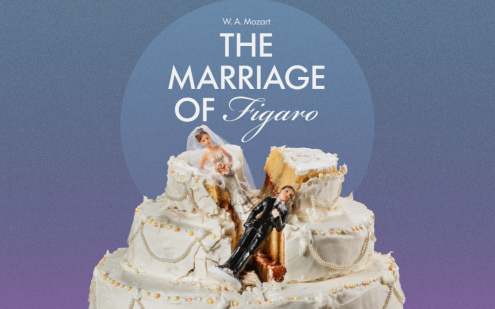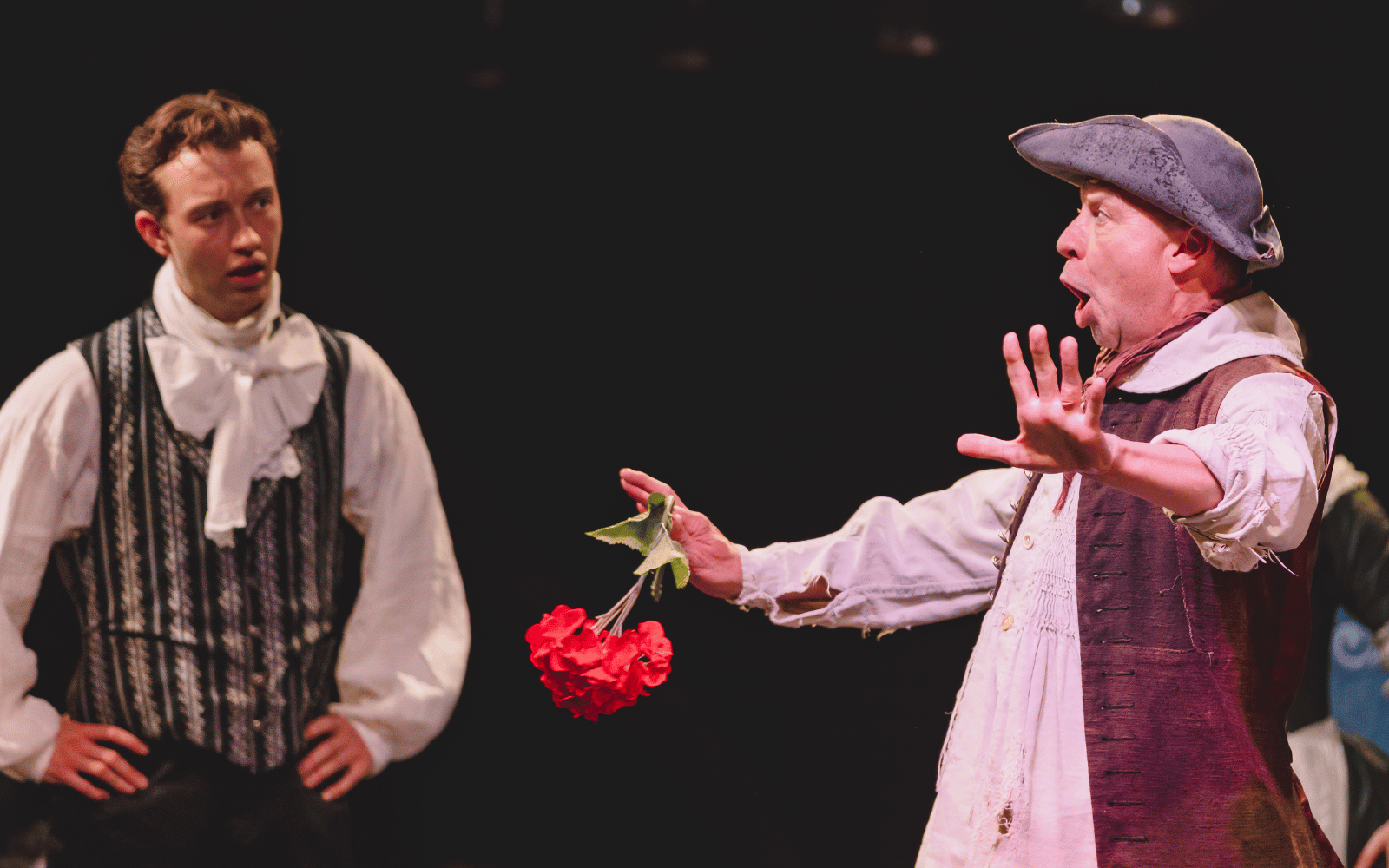
Mozart’s much-loved The Marriage of Figaro is a riotous story of romance, jealousy, mistaken identities and revenge, all unfolding over a single chaotic day.
Whether you’re new to the opera or simply want to know a little more before you take your seat, here’s a quick guide on what to expect when Wild Arts bring their production to Norwich Theatre Royal this September.

The story of a wedding, a wandering eye and a whole lot of trouble
It’s the morning of Figaro and Susanna’s wedding, but there’s a problem: their employer, the Count Almaviva, also has his sights set on the bride-to-be.
A furious Figaro is determined to outwit his master, while the Countess Almaviva – unhappy with her husband’s behaviour – joins Susanna in a plan to teach him a lesson.
What follows is a whirlwind of secret meetings, disguises, misunderstandings and elaborate schemes. Throw in the lovestruck pageboy Cherubino, the Countess pretending to be Susanna, Susanna pretending to be the Countess, and a surprise family revelation involving Figaro, and you have all the ingredients for one very entertaining day.
Thankfully, after all the plotting and confusion, love and forgiveness eventually win the day.
You’ll be humming the music for days
The Marriage of Figaro is packed with instantly memorable tunes. The fast and fizzing overture sets the tone, while some of Mozart’s most beautiful arias give us a glimpse into the characters’ inner lives.
Cherubino’s “Voi che sapete” captures the excitement and confusion of falling in love, while Figaro’s “Non più andrai” is a mocking farewell to Cherubino. The Countess has two of the opera’s most moving moments in “Porgi, amor” and “Dove sono”, as she longs for the husband she used to love.

Mozart was renowned for his extraordinary musical talent from a young age, but this opera shows how brilliantly he understood people. Each character has their own musical personality, and Mozart uses the music to reveal things they may not say out loud.
Typical of operas of the classical period, the arias are connected by ‘recitative’, a speech-like style of singing that’s accompanied by just a few instruments such as the cello or harpsichord (‘continuo’), where the plot development happens.

Some history
The entire opera was composed in six weeks, with its first performance, conducted by Mozart himself, taking place in Vienna in 1786. Working with his librettist, Lorenzo Da Ponte, the pair went on to collaborate on two more world-renowned masterpieces: Don Giovanni and Così fan tutte.
The Marriage of Figaro is based on the 1784 play A folle journée, ou le Mariage de Figaro by French writer Pierre Beaumarchais. The original play poked fun at the aristocracy and questioned the privileges enjoyed by the upper classes – ideas which, at a time of revolution, were dangerously controversial.
With the play banned in Vienna, Da Ponte persuaded Emperor Joseph II to allow an operatic version that toned down some of the play’s more provocative material while retaining its sharp humour and focus on the relationship between servants and their masters.
Contrary to popular belief, no music was written before obtaining the Emperor’s permission, making Mozart’s writing all the more remarkable.
Did you know?
- The full Italian title is Le nozze di Figaro, ossia la folle giornata, which translates roughly as The Marriage of Figaro, or The Day of Madness.
- It’s a sequel. Figaro had already appeared in Beaumarchais’ earlier play The Barber of Seville. Rossini later turned that story into his own famous opera, The Barber of Seville.
- There’s a famous musical trick at the heart of it. In the Act II finale, what begins as a small exchange gradually grows into an extraordinary ensemble as more characters enter the scene. It’s one of the great examples of Mozart turning chaos into music.
- Even if you’re not familiar with the opera, its music is woven into our culture through films and TV – the duet ‘Sull’aria’ that appears in The Shawshank Redemption, and the high-energy overture used in The King’s Speech are just two examples. The march in Act III also remains a popular choice at weddings.
About Wild Arts
Wild Arts return to Norwich Theatre after sell-out performances of Mozart’s The Magic Flute and Donizetti’s The Elixir of Love at the Playhouse.
In a few short years, this relatively new UK-based opera company has garnered a string of 5-star reviews and audience acclaim for their performances featuring the most exciting up-and-coming and established singers, players and directors.
And here’s the really exciting part… no two performances are ever quite the same! Wild Arts travel everywhere from theatres of all sizes to stately homes, outbuildings and amphitheatres, making performances organic, wild and true to the place in which they are performed.